

To put it another way, the 2835 is like a small room that can fit a single bed, while the 3030 is a slightly larger room that can accommodate a double bed. With a larger chip area, it can carry a higher current, resulting in more light output. This fundamental logic determines the differences in all subsequent parameters.
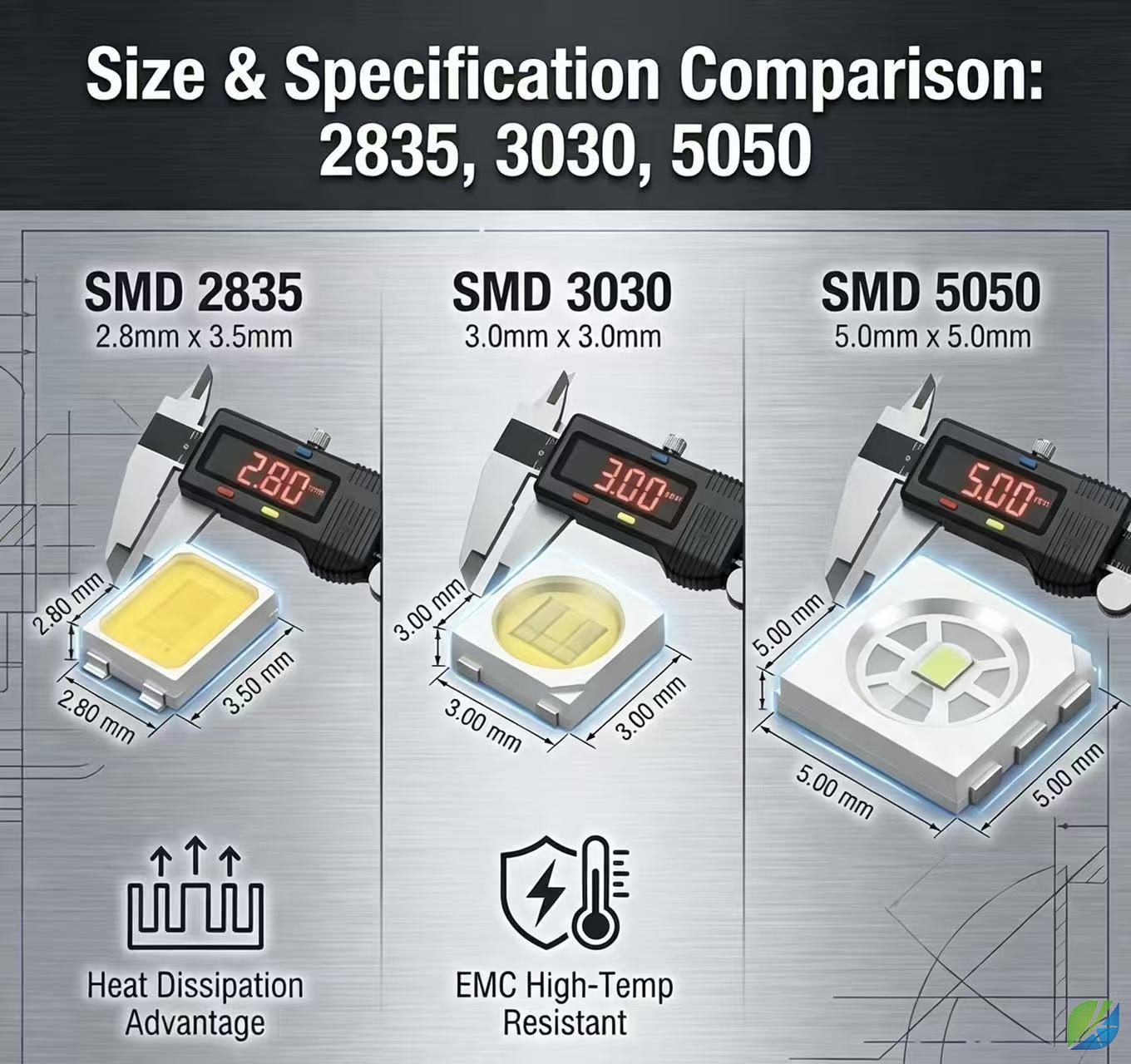
Power and brightness: Numbers won't deceive. First, take a look at a set of measured parameters. The common power of 2835 LED beads is 0.2W to 0.5W, with a driving current of 60mA to 150mA, and a single output of approximately 20 to 80 lumens. The starting power of 3030 LED chips is 0.5W, with mainstream power ranging from 0.5W to 1W and a driving current of 150mA to 350mA. At 0.5W, it can output 80 to 100 lumens, and at 1W, it can reach 150 to 200 lumens. Converted: The luminous flux output of a 3030 in the 0.5W range has approached or even exceeded the limit of 2835 in the 0.5W range. Pushing it to 1W, the brightness of one 3030 can match that of two to three 2835s. This means that to make lighting fixtures with the same brightness, using 3030 requires fewer beads, fewer solder joints, and theoretically lower failure rates. Many engineering lighting projects tend to choose 3030, not only because it lights up individually, but also because there are fewer light beads, which reduces maintenance costs in the later stage.
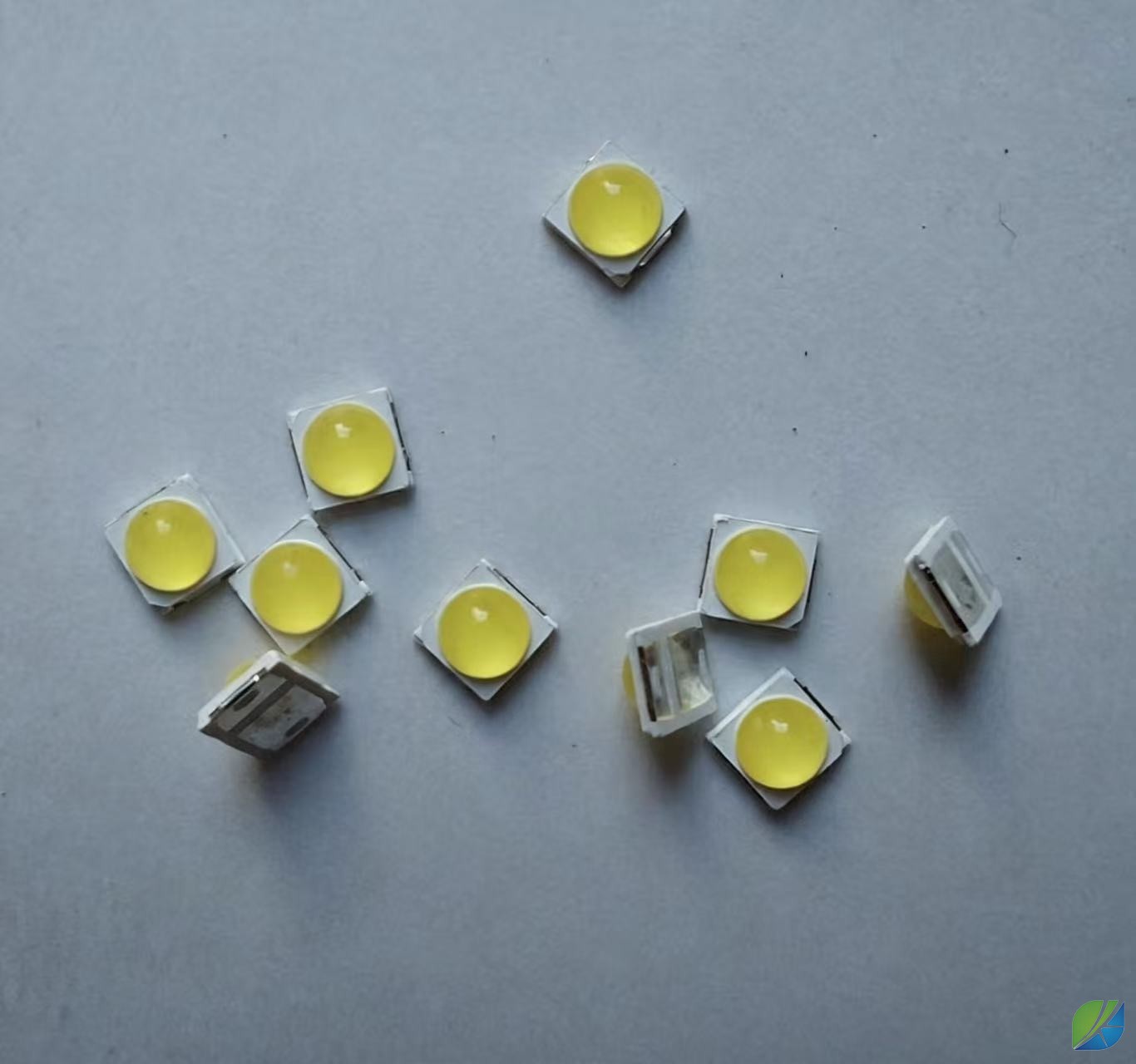
Light efficiency and heat dissipation: The true difference in light efficiency (lm/W) at high power is how many lumens of light are converted per watt of electrical energy, which is a key indicator for measuring whether a lamp bead saves electricity. The luminous efficiency of 2835 LED beads is usually between 100 and 160 lm/W, and excellent products can reach over 180 lm/W; 3030 LED beads range from 120 to 180 lm/W, with high-end models exceeding 200 lm/W. At first glance, the difference is not significant, and even 2835 has slightly higher light efficiency under low current driving - the chip generates less heat in low-power state, and the electro-optical conversion efficiency is indeed more ideal. But in practical applications, the advantage of 3030 is that it can still maintain high light efficiency at high power, while once 2835 is pushed above 0.5W, the light efficiency will significantly decline because the heat dissipation cannot keep up and the heat becomes lost. The root of this difference lies in thermal resistance - the core indicator for measuring heat dissipation capability. The thermal resistance of 2835 is usually between 30 and 40 ° C/W, while 3030 is between 20 and 30 ° C/W. The lower the thermal resistance, the faster the heat generated by the chip is dissipated, resulting in a lower junction temperature. Experimental data shows that under the same layout and working hours, the PCB surface temperature of the 2835 scheme can reach 68 ° C, while the 3030 scheme is controlled within 55 ° C. The LED industry has a proven experience: for every 10 ° C decrease in temperature, the lifespan can almost double. This is not marketing jargon, it is the basic physical laws of semiconductor devices
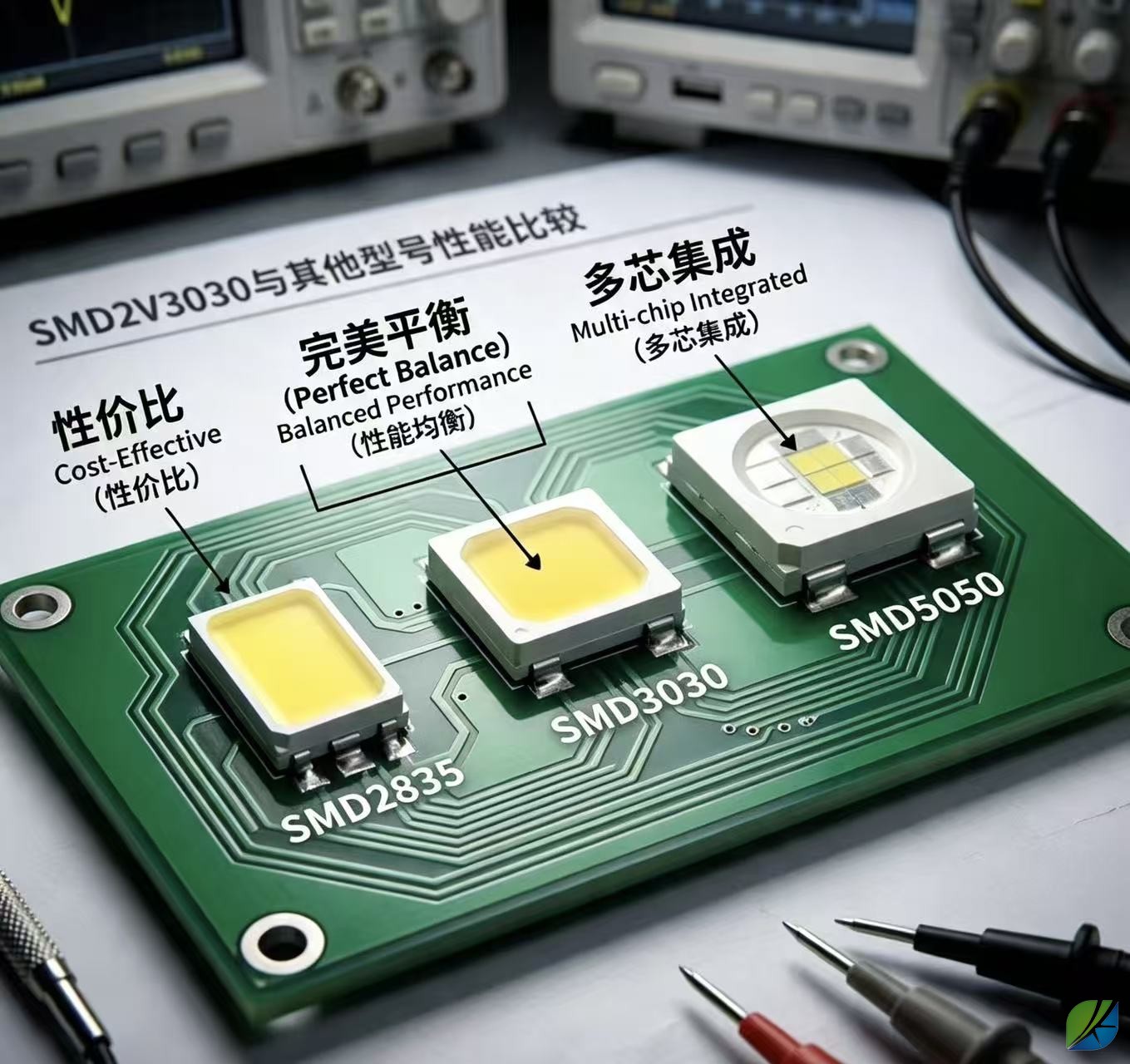
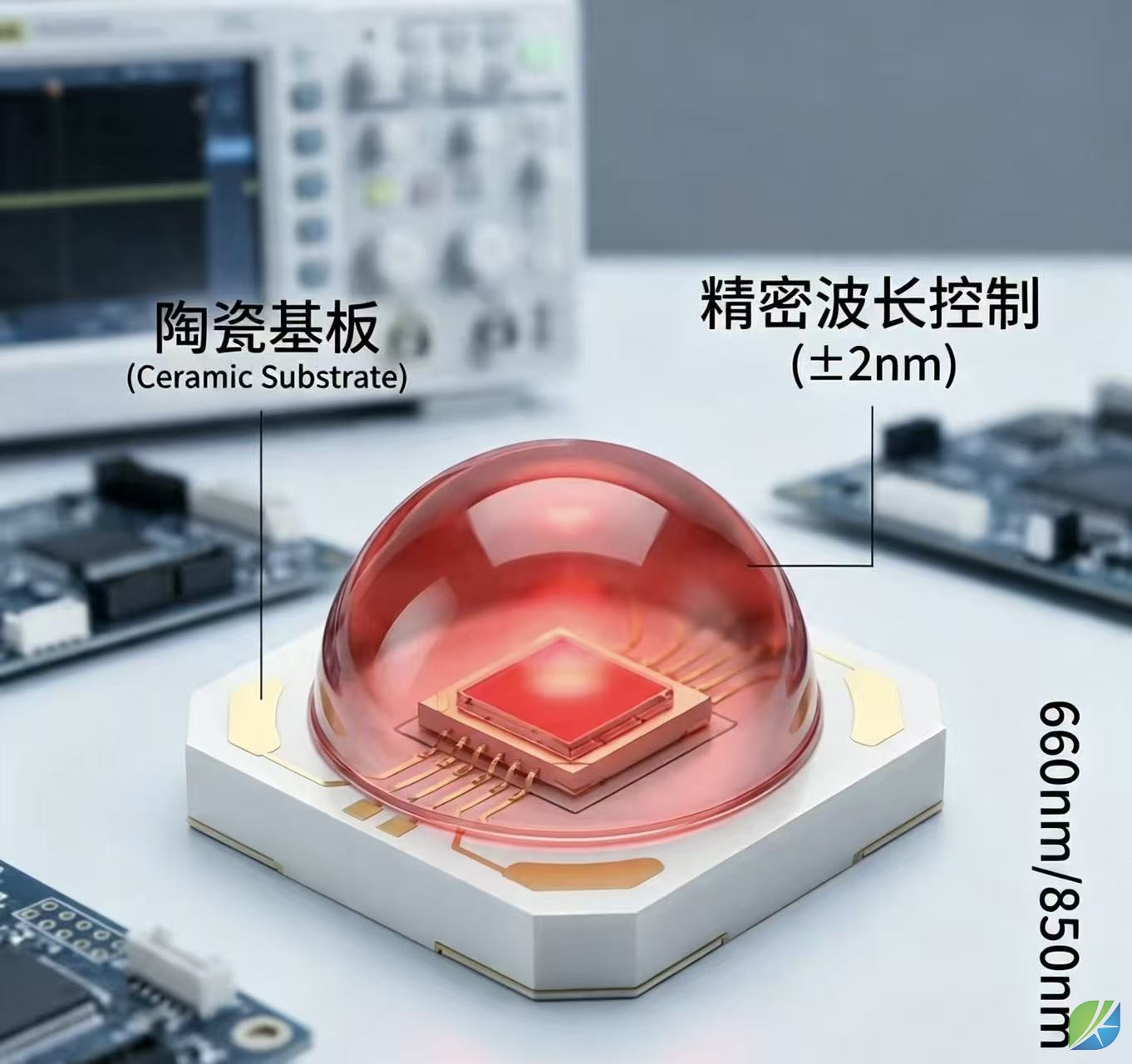
Encapsulation material: Behind the invisible differences in cost, size, and thermal resistance, encapsulation material is another key factor. 2835 commonly used PPA or PCT plastic brackets have average temperature resistance and are superior in terms of low cost; 3030 is commonly used with EMC (epoxy resin molded plastic) or ceramic brackets, which are resistant to high temperatures and light decay, but the material itself is much more expensive. The thermal conductivity of ceramic brackets is much better than that of PPA plastics, which can transfer chip heat to the PCB board faster. This is not an optional upgrade - for lamps that require long-term high-power operation, the difference in packaging materials directly determines the rate of light decay and lifespan. After being lit for 10000 hours, the PPA bracket's LED beads may have shown significant color temperature drift and brightness attenuation, while the ceramic bracket's LED beads show minimal changes. In addition, the testing and BIN accuracy requirements for 3030 LED beads are higher, and the yield rate is relatively lower. The cost of this part is also allocated to the unit price. Overall, the cost of a single 3030 is approximately 1.5 to 2 times that of 2835, which is consistent with the actual market quotation.
Expensive does not equal value, choosing the right scene is the key. Despite all the advantages of 3030, expensive does not equal value. Home atmosphere lights, wardrobe lights, and background decorative lights do not require high brightness. 2835 is already sufficient, but installing 3030 is actually a waste of money. The thin thickness of 2835 can also be used for more dense arrangement, and the light strip emits more evenly, which is something that 3030 cannot achieve in a compact space. The value of 3030 is truly reflected in commercial lighting, engineering lighting, and high brightness demand scenarios. 3030 street lamps use half fewer beads than 2835, significantly reducing assembly and maintenance costs; The high brightness light strips in the exhibition hall and supermarkets, with the 3030 running for a long time, result in slower light decay, making it more cost-effective throughout its entire lifecycle. If you are making outdoor floodlights, mining lights and other lighting fixtures that require long-term high-power operation, choosing 3030 is not a matter of "whether or not", but a matter of "whether or not to save". Another easily overlooked point is that 2835 and 3030 cannot be directly interchanged. The pad shapes are different, 2835 is a rectangular pad and 3030 is a square pad; The driving current is also mismatched. Installing the 3030 on the 2835 driving board may result in insufficient brightness, and conversely, it may directly burn out the lamp beads. Selection is a fixed decision during the design phase, and if you want to switch later on, it's like making a new board.

Contact: Mr Huang
contact number: 0755-27167848 / 0755-27168227 / 0755-27168667
Telephone: 13247542112/13590473452
Fax: 0755-27167816
Mailbox: zsl@yuankeled.com
Address: 2nd floor, second building, Wenge Industrial Zone, Gongming. Guangming New District, Shenzhen